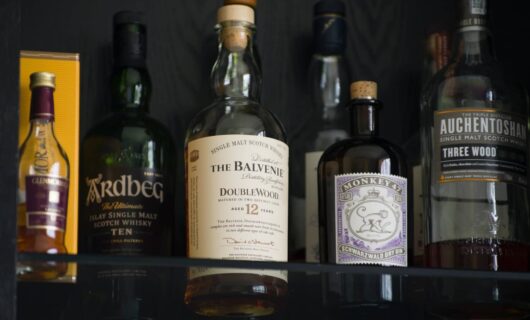
Ever wondered what actually happens between a field of barley and a bottle of whisky? This category is our home for articles on whisky production — malting, mashing, fermentation, distillation in pot or column stills, and the years of cask maturation that turn a clear spirit into the amber whisky in your glass.
We cover how each stage shapes the final flavour: why the shape of a still matters, how peat is used during malting to create smoky character, and why the same spirit can taste completely different depending on whether it rests in a former bourbon barrel, a sherry cask, or something more unusual. We also look at how cask size, warehouse climate and time all interact to produce the whisky that eventually reaches the bottle.
Understanding production does not require a chemistry degree, and that is the aim of these posts: to explain the process in plain language so that every tasting note makes a bit more sense once you know where the flavour actually comes from.

Bourbon Whiskey Flavours – The What and the How

Is Whisky Artificially Aged? The Ultimate Answer

What’s The Difference Between Scotch and Other Whisky?

Old and Rare Whisky: Unveiling the Top 10 Rarest Whiskies in the World

What is Single Malt Scotch Whisky?

What is Scotch Whisky Made Of?
What is Peated Single Malt Whisky and 7 Best Peaty Expressions
What is Blended Scotch Whisky?